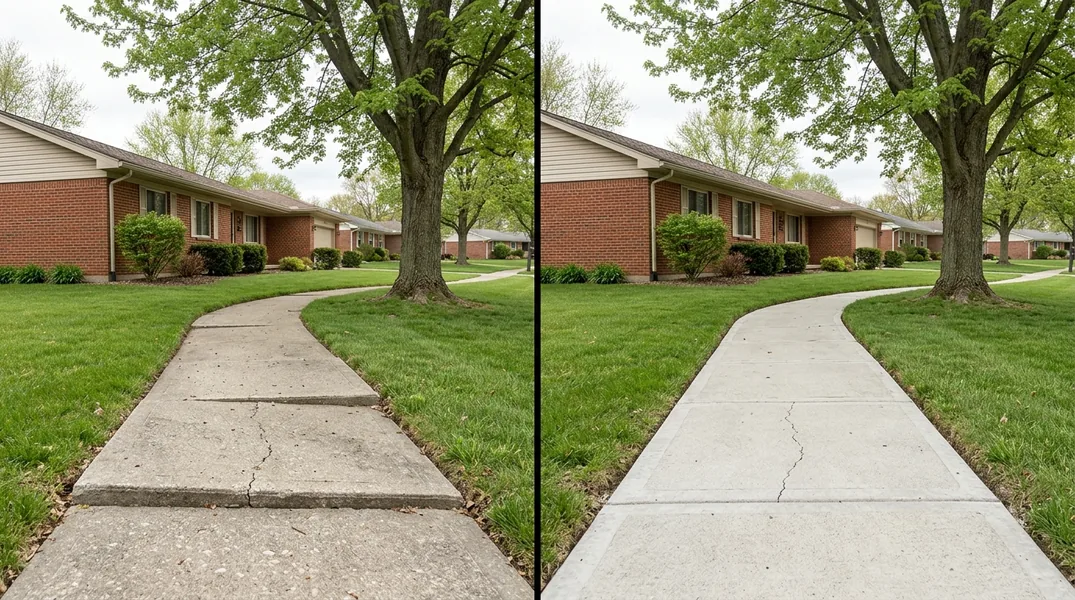
Understanding Freeze-Thaw Damage in Columbus Winters
Columbus experiences one of the most challenging climates for concrete in the Midwest. The freeze-thaw cycle that defines our winters is the primary culprit behind much of the concrete damage homeowners face each year. When temperatures fluctuate above and below freezing, moisture trapped within concrete expands and contracts repeatedly, creating internal stress that eventually leads to cracks, spalling, and surface deterioration.
The problem intensifies because Columbus winters don't follow a predictable pattern. A 40-degree day might be followed by a hard freeze that night, and then another warm spell days later. This constant cycling is far more damaging than consistently cold weather would be. Water enters the concrete through microscopic pores and cracks, and when it freezes, it expands with tremendous force. Over the course of a single winter season, dozens of these freeze-thaw cycles can accumulate, weakening your concrete from the inside out.
How Clay Soil Compounds Concrete Cracking
Much of the Columbus area sits on clay-rich soil, which creates a secondary problem for concrete structures. Clay soil is highly expansive, meaning it absorbs water and swells during wet seasons, then shrinks and becomes hard as rock during dry periods. When a Concrete Driveway is built over this unstable foundation, the shifting ground beneath causes the concrete to move unevenly. This differential movement creates stress points where cracks begin to form, often in patterns that follow the clay's expansion and contraction.
The combination of freeze-thaw cycles above ground and clay soil movement below ground creates a perfect storm for concrete damage. A crack that starts from soil movement allows water to penetrate deeper into the concrete, which then freezes and expands, widening the crack further. What might have been a minor surface issue in spring can become a serious structural problem by the following winter. This is why homeowners in Columbus often notice their concrete damage seems to accelerate year after year if left unaddressed.
Signs Your Concrete Needs Winter Care and Repair
Recognizing early warning signs of freeze-thaw and clay soil damage can save you thousands of dollars in repair costs. Look for fine, hairline cracks that appear in a map-like or spider-web pattern across your driveway or patio. These are classic indicators of freeze-thaw stress combined with soil movement. You might also notice larger cracks that seem to widen noticeably from season to season, or areas where the concrete surface is flaking or spalling, exposing aggregate underneath.
Another telltale sign is uneven settling, where one section of your driveway appears higher or lower than adjacent sections. This occurs when clay soil beneath shifts unevenly, and it's a clear indication that your concrete foundation is compromised. If you see water pooling on your driveway after rain or snow melt, that's also a warning sign that the surface has developed enough damage to affect drainage. The sooner you address these issues with Concrete Repair & Resurfacing, the better your chances of preventing more extensive damage during the next freeze-thaw cycle.
Preventative Winter Concrete Care in Ohio
The best defense against freeze-thaw damage is preventative care. Sealing your concrete before winter arrives is one of the most effective steps you can take. A quality concrete sealer fills surface pores and blocks water from penetrating the concrete, dramatically reducing the amount of moisture available to freeze and expand. You should reseal your driveway every two to three years, and always plan to do this in fall before the freeze-thaw cycle begins in earnest.
Beyond sealing, proper drainage around your concrete surfaces is critical. Ensure that water runs away from your driveway and doesn't pool in low spots. If you have existing cracks, even small ones, have them filled before winter. Small cracks are inexpensive to repair now, but if water seeps into them and freezes, they'll expand significantly and cost far more to fix. You should also avoid using rock salt or harsh de-icers on your concrete, as these chemicals accelerate deterioration. Instead, use sand or calcium chloride products that are gentler on concrete while still providing traction during icy conditions.
When to Call a Professional for Concrete Repair Near Me
If you've already noticed significant cracking, spalling, or uneven settling in your concrete, it's time to call a professional. DIY repair attempts often fail because they don't address the underlying causes, such as poor drainage or unstable soil beneath the surface. A qualified concrete contractor can assess the extent of damage, determine whether the problem is primarily freeze-thaw related or soil movement, and recommend the best repair solution for your specific situation.
Columbus Concrete specializes in identifying and repairing the exact type of damage that our local climate and soil conditions create. We've helped hundreds of homeowners throughout Columbus restore their driveways and patios to safe, attractive condition. Depending on the severity of damage, repair solutions might range from crack filling and sealing to full resurfacing or replacement. The key is to act before the damage spreads further. If you're concerned about your concrete, contact us at (380) 270-2832 for a free estimate and expert assessment of your situation.
Planning for Long-Term Concrete Durability in Columbus
Long-term concrete durability in Columbus requires a combination of proper installation, preventative maintenance, and timely repairs. When new concrete is installed, the quality of site preparation is crucial. Proper grading, drainage systems, and soil stabilization can significantly reduce future freeze-thaw and settling problems. If you're considering new Concrete Driveways or other concrete work, investing in quality installation now prevents expensive repairs later.
For existing concrete, establish a regular maintenance routine. Seal your concrete every few years, inspect it regularly for new cracks or damage, and address problems promptly. Keep gutters and downspouts clean so water doesn't accumulate near your concrete surfaces. In winter, remove snow and ice promptly to minimize the freeze-thaw cycles your concrete experiences. By taking these steps, you can extend the life of your concrete significantly and avoid the accelerating damage cycle that affects many Columbus homeowners. If you need professional help with maintenance, repair, or new installation, Columbus Concrete is here to serve you with experienced, local expertise.
Looking for a professional tree service in Columbus? Columbus Concrete responds fast for all your concrete needs.
Get a Free QuoteOur services: Concrete Driveways · Concrete Patios · Stamped & Decorative Concrete